
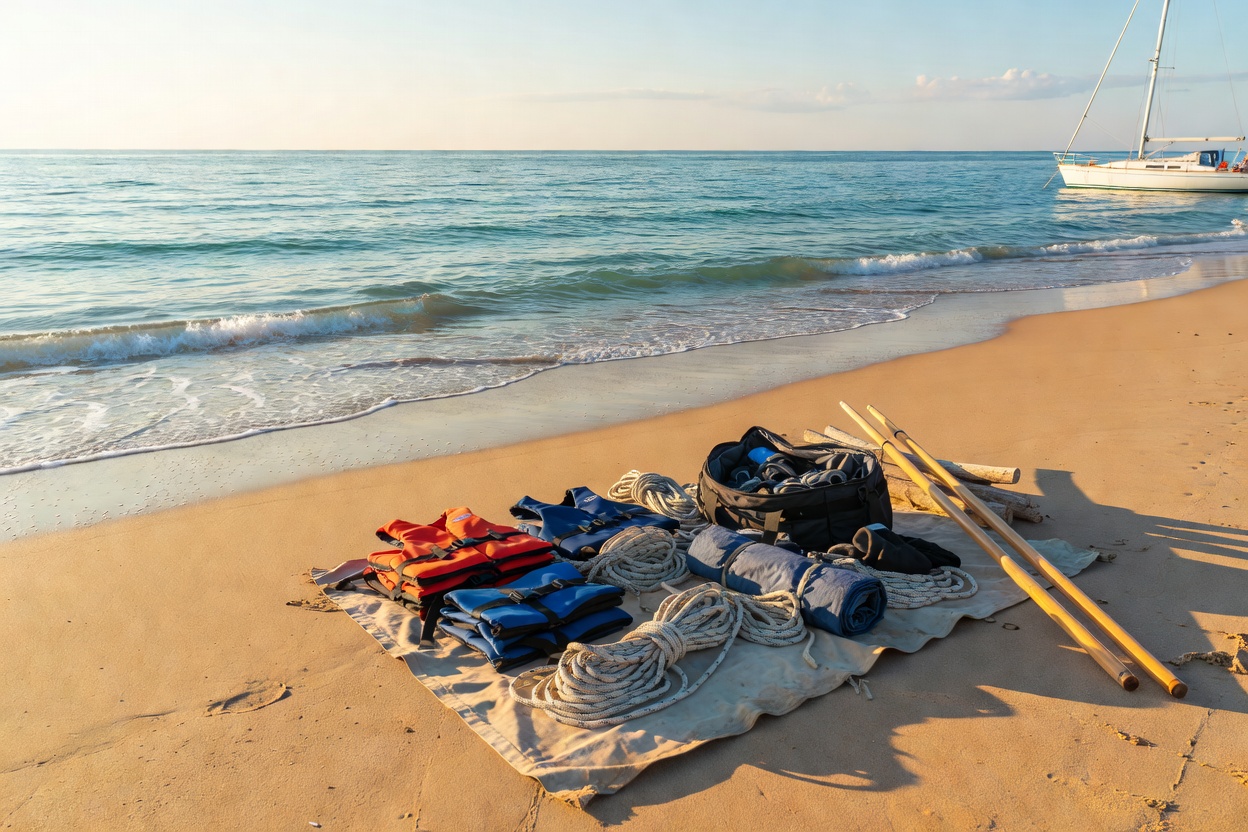
On a yacht you will usually share a small cabin and stow your belongings in limited lockers. For dinghy courses you will spend long periods on the water and in the sun. In both cases, the right kit makes the week more comfortable and safer.
Key takeaways
- Use a soft, foldable bag; hard suitcases do not fit in yacht cabins.
- Footwear with non-marking soles and sun protection are the most important items.
- Carry ID, certificates and insurance documents in a waterproof pouch.
Footwear
- Non-marking deck shoes or sailing boots with good grip; many yachts ban dark, marking soles.
- Sandals or neoprene beach shoes for dinghy launches and rocky shorelines.
- Flip-flops for harbour and showers.
Clothing
- Lightweight, quick-drying shorts, long trousers and long-sleeved sun tops.
- A light waterproof jacket for spray and evening chill, even in summer.
- A fleece or warm layer for early spring or autumn trips and night passages.
- Swimwear and a quick-dry towel.
Sun and wind protection
- A wide-brim hat with a chin strap, or a cap with retainer.
- Polarised sunglasses with a floating strap.
- High-factor, water-resistant, reef-safe sunscreen and lip balm with SPF.
- Sailing gloves to protect hands when handling ropes.
Safety and practical items
- A head torch with a red-light mode for night navigation.
- A personal lifejacket if you own one that fits well; otherwise ask your school what is supplied.
- A personal knife or multi-tool if permitted, and a whistle.
- A waterproof dry bag for phone, wallet and documents.
- A refillable water bottle and any personal medication in original packaging.
- Seasickness remedies; ask a pharmacist for advice on what suits you and try them before the trip.
Documents
- Passport or national ID.
- Any sailing certificates and your logbook.
- Booking confirmations and emergency contacts.
- Travel insurance that explicitly covers sailing and watersports activities.
A UK GHIC or an EU EHIC may provide access to state healthcare in Greece, but it is not a substitute for travel insurance, which can cover repatriation, personal accident and activity-specific risks. See the UK government’s NHS GHIC guidance for details.
Optional extras
- A power bank and waterproof phone case.
- A small notebook and pencil for passage notes.
- Earplugs, since cabins can be noisy with halyards and neighbours.
- Euro cash for small harbour bars and tavernas.
Printable checklist
- Soft bag and dry bag
- Deck shoes, sandals, flip-flops
- Hat, sunglasses, sunscreen, gloves
- Waterproof jacket and warm layer
- Head torch, whistle, water bottle
- ID, certificates, logbook, insurance
Ask your school for its kit list; many supply lifejackets, waterproofs and wetsuits, which means you can pack less. See also our guide to choosing a school for the questions to ask before you go.