
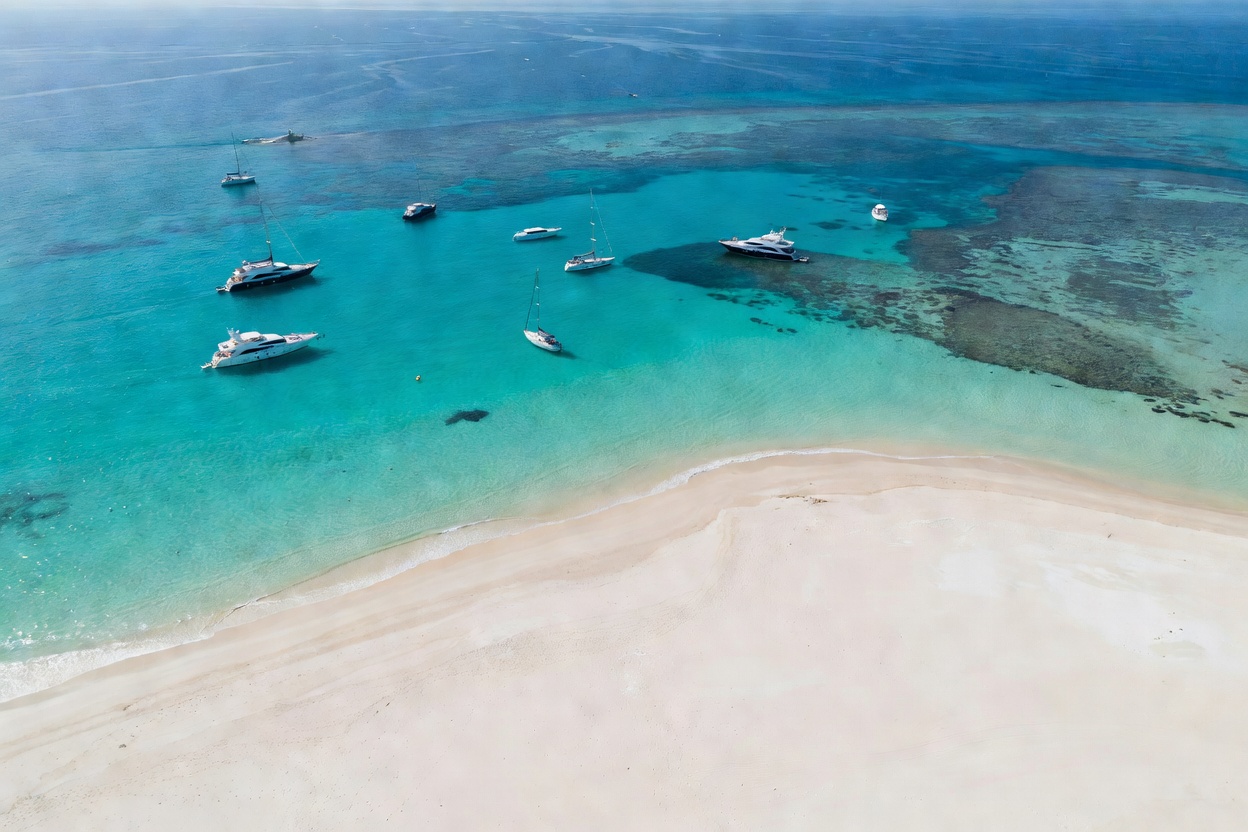
Greek waters stretch from the Ionian Sea in the west to the Aegean in the east and south. The geography and wind patterns differ enough that a beginner’s week in one area can feel very different from the same week in another.
Key takeaways
- The Ionian is the gentlest area and the best default for beginners.
- The Saronic Gulf is convenient and compact but can be busy and breezy.
- The Cyclades and Dodecanese reward experience, especially in July and August.
- The Sporades sit between the two in difficulty.
The Ionian Sea
On Greece’s west coast, the Ionian islands such as Lefkada, Meganisi, Kefalonia, Ithaca and Corfu have protected channels, many anchorages and generally moderate winds. Afternoon sea breezes are common, and the Meltemi has far less influence than in the Aegean. Distances between harbours are short, and sailing is mostly in sight of land, which suits learners. Bases include Lefkada and Preveza on the mainland coast, and Corfu further north. Club Vass on Lefkada is a good example of a beginner-friendly operation here.
The Saronic Gulf
South of Athens, the Saronic Gulf includes Aegina, Poros, Hydra and Spetses. It is attractive for first-timers because it is easily reached from Athens airport and passages are short. The downside is traffic in summer, crowded harbours and afternoon winds that can build when the Meltemi extends into the gulf. Plan early starts and be prepared to anchor or moor in busy places. Istion Yachting operates in this region.
The Cyclades
Islands such as Paros, Naxos, Mykonos and Santorini sit in the heart of the Aegean and are strongly affected by the Meltemi. The scenery is spectacular, but crossings are longer and the wind can be strong and gusty. They are better suited to experienced crews or to learners with a skilled skipper, outside the peak months.
The Sporades
Skiathos, Skopelos and Alonissos in the northwest Aegean offer green islands and sheltered bays. Conditions are generally moderate, though northerly winds can freshen. They sit between the Ionian and Cyclades in difficulty.
The Dodecanese
Kos, Rhodes and their neighbours near the Turkish coast have strong summer winds and accelerating gusts between islands. They are typically best for crews with some experience, or for learners joining a well-run flotilla or skippered programme.
| Area | Wind (summer) | Typical passages | Beginner rating |
|---|---|---|---|
| Ionian | Light to moderate sea breezes | 1–4 hours | Excellent |
| Saronic Gulf | Moderate; can strengthen | 1–4 hours | Good |
| Sporades | Moderate, northerly | 2–5 hours | Good |
| Cyclades | Strong Meltemi | 3–7 hours | Challenging |
| Dodecanese | Strong, gusty | 3–7 hours | Challenging |
How to choose
- If you are a complete beginner, start in the Ionian.
- If you want Athens convenience, choose the Saronic with early starts and a skipper.
- If you are keen on the Cyclades, go in June or September, or with an experienced skipper.
- Always read the forecast and talk to your school about local conditions. See our Meltemi guide.
Further reading
- Visit Greece, island and destination information.
- HNMS, official Greek weather service.